
Find Out If Your BMW Has an Open Recall
Type in any BMW VIN to check for BMW recalls in seconds. See recall details, safety defects, affected parts, and the complete vehicle history report. Do this before you buy or drive a used BMW.
How to Check if Your BMW Has a Recall
By using our tool, getting BMW recall information takes just three steps and under a minute to complete.
Step 1: Enter the VIN
Type the 17-character VIN (Vehicle Identification Number) into the form at the top of this page. You can also check by entering the license plate number and selecting your US state.
Step 2: Search VIN
Click the "Search VIN" button to pull up a preview of the vehicle. You will instantly see details like the year, make, model, trim, engine type, and more.
Step 3: Get Your BMW Recall Report
Once you review the vehicle preview, proceed to payment to access the full recall details and the complete vehicle history report. Your report is available for download as a PDF so you can save or share it anytime.
What Is a BMW Recall?
A BMW recall is an official action taken when BMW or federal safety regulators at NHTSA identify a defect in a vehicle that puts drivers, passengers, or others at risk. Once a recall is filed, BMW is required by law to fix the problem at no cost to the vehicle owner.
Checking for recalls before buying or selling a used BMW is a move that can save you from serious trouble. An open recall means a safety problem has been identified but not yet repaired. That kind of detail can change the outcome of a deal and, more importantly, keep people safe on the road.
BMW Open Recall Facts and Figures: 2025 Statistics
Here is a look at the numbers behind BMW recalls in 2025. These figures give buyers and owners a real sense of how widespread safety issues can be across the BMW lineup.
21 Recalls
BMW issued 21 recalls due to safety and defects.
508,338 vehicles
Over 508,000 BMW vehicles impacted by various safety issues.
10+ Models
More than 10 BMW models affected across multiple series.
Why Checking a BMW for Recalls Is Worth Your Time
A BMW recall check gives owners, buyers, and sellers important safety and financial information that can make a real difference in any used vehicle transaction. Here’s why it’s important:
Owners
Staying on top of your BMW's recall status means you can get safety issues resolved before they lead to bigger problems.
Keep Your Vehicle Safe to Drive
An open recall signals a known defect that has not been fixed yet. Getting it repaired keeps you and your passengers protected on the road.
Claim the Repair at No Charge
Every safety recall repair is covered at zero cost. If you are unaware of an open recall, you could end up paying out of pocket for what was never your expense to begin with.
Stop Small Issues From Growing
Some recall defects gradually damage other systems in the vehicle. Catching and fixing the problem early can prevent more serious and costly repairs down the line.
Buyers
Buyers who check BMW recall status before signing anything are better informed and far less likely to walk into a deal they will regret.
Find Safety Problems Before You Buy
Sellers do not always share recall information upfront. Running your own check means you are not relying on someone else's honesty to know whether the car is safe.
Use the Recall as a Bargaining Tool
If you find an open recall, that is a real point to bring to the table. You can ask the seller to lower the price or have the recall repaired before the handover.
Avoid Unexpected Repair Costs
Walking into a car purchase without knowing its recall history can mean surprise expenses shortly after buying. A quick check now keeps that from happening to you.
Sellers and Dealers
Sellers and dealers who check recall status ahead of listing a vehicle can protect their reputation and close deals with far less friction.
Earn Trust From the Start
Buyers appreciate transparency. Sharing a recall report that shows all issues have been addressed signals that the vehicle is in good order and the seller is being straight with them.
Price the Vehicle With Confidence
Knowing a BMW's recall status before listing it means you can set a price that reflects the vehicle's true condition and avoid awkward back-and-forth when buyers do their own research.
Reduce the Chance of a Deal Falling Apart
Unresolved recalls discovered late in the sale process can kill deals quickly. Handling recall checks before listing helps sellers move vehicles without last-minute surprises.
What Details Are Included in a BMW Recall Report?
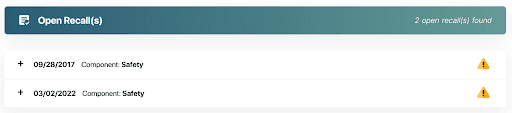
A BMW recall check report breaks down each safety action clearly so you know what the issue is, which parts are involved, and how it gets resolved.
Recall Date
The date the recall was officially announced by BMW or NHTSA. This tells you how long the issue has been on record and whether a repair has had time to be completed.
Affected Components
The specific part or system that triggered the recall, such as the engine cooling system, airbag inflator, brake lines, fuel pump, or electronic control unit in the vehicle.
Campaign Number
This is the NHTSA tracking number tied to the recall campaign. Dealers and federal databases use it to manage the flow of repair parts and track how many vehicles have been serviced.
Recall Number
BMW's own internal reference number for the recall. Having this number ready when you call a dealership can cut down on wait time and help the service team pull up your file quickly.
Remedy Description
A clear description of what BMW will do to fix the problem. The fix could involve replacing a faulty component, applying a software patch, installing a new assembly, or some other approved repair method.
Summary and Note
A plain summary explaining what caused the recall and why it is considered a safety risk. Any additional notes about part availability, interim measures, or special conditions are also included.
Other Records You Get in a Full BMW Recall Check Report
Recall data is just the starting point. Here is what else comes with a complete BMW vehicle history report.

Vehicle Usage Records
Find out whether the vehicle was used as a personal car, a corporate fleet vehicle, a rental, or for commercial purposes. How a vehicle was used has a direct effect on how it was maintained and how worn it really is.

Ownership History
See the total number of previous owners and how long each one kept the vehicle. A BMW that passed through many hands over a short time period is worth examining more closely before you commit to buying.

Title Brand Check
Check for any title brands such as salvage, rebuilt, flood damage, or lemon law buyback. These brands point to significant past problems and can lower the vehicle's resale value.

Accident Records
Review the accident history for the vehicle, including the type of crash, which area of the vehicle took the impact, and whether the airbags activated during the event.

Mileage Records
Compare mileage readings recorded at different points across the vehicle's life. Gaps in the numbers or figures that seem off can be a sign of odometer fraud.

Lien and Loan Records
Check if the car still has an outstanding loan or lien tied to it. Taking ownership of a car with an unresolved lien can mean inheriting the previous owner's debt, creating real financial and legal headaches.

Theft Records
Find out if the vehicle was ever reported stolen or flagged as a recovered theft vehicle. A theft record can create complications during registration, financing, and future resale.

Sales Listing History
Review past sale listings, including the asking prices and the platforms where the vehicle was advertised. This provides an overview of how the market has valued the car over time.

Auction Records
See whether the vehicle was sold through a dealer auction or public sale. Auction records can include photos, damage grades, inspection notes, and other disclosures.
A VIN Check Revealed 2 Open Recalls and a Rebuilt Title on This BMW X3
Chris wanted a used luxury SUV without the luxury price tag. He found a 2009 BMW X3, and the seller said it was in great shape with no major issues. Chris ran a BMW check before making any offer.
What the Report Found
- 2 open recall records never fixed
- 1 accident record
- 1 damage record
- 3 lien or loan records
- Salvage and rebuilt title brands
Possible Past Incidents and the Car's Condition
Two unfixed recalls alongside a salvage and rebuilt title were a serious combination. The car had been damaged badly enough to be written off, then rebuilt and put back on the market. The damage record confirmed the accident was no minor bump.
How the Report Helped Chris
Chris walked away from a car that had been dressed up to look road-ready. The BMW recall check report showed him the full truth before he spent his money on something rebuilt from serious damage.
What to Do When You Find an Open Recall on Your BMW
An open recall on your BMW is something that needs to be dealt with quickly. Follow these steps to get it taken care of the right way.
- 1
Confirm the Recall
Run the VIN through our tool to make sure the recall actually applies to your specific vehicle. BMW recalls are often limited to vehicles built within a certain date range. - 2
Schedule an Appointment
Call or visit an authorized BMW dealership and provide your VIN and the recall number. The dealer will verify the repair is covered, check if parts are available, and set up an appointment time that works for you. - 3
Visit and Get It Repaired
Take your BMW to the dealership on your scheduled date. All safety recall repairs are completed at no cost to you.
Where to Find the VIN on Your BMW
Your BMW's VIN is a 17-character code that serves as the vehicle's permanent identity. Knowing where to look for it makes running a recall search quick and easy. Check these places:
On the Vehicle | In the Vehicle’s Paperwork |
Driver’s side dashboard | Vehicle’s registration |
Driver's Side Door Jamb | Title |
Engine block | Insurance policy |
Frame Rail | Maintenance records |
Major Defects That Have Led to BMW Vehicle Recalls
Certain types of defects come up repeatedly in BMW's recall history. Here are six that have triggered significant recall actions, along with the facts behind each one.
Brake System Failure
In 2024, faulty integrated braking systems caused loss of brake assist and stability control, affecting nearly 80,000 BMW vehicles across multiple models.
Engine Fire Risk
Over 910,000 vehicles were recalled in 2022 due to overheating components and fire risks in engines, especially older models from 2006–2013 production years.
EGR Cooler Fire Hazard
The year 2021 saw BMW recall 50,404 diesel vehicles after EGR cooler leaks caused overheating, melting parts, and potential engine compartment fires.
Electrical System Failures
From 2025 to the start of 2026, starter motor, wiring harness, and battery cable defects caused short circuits, engine stalls, or fire risks in over 50,000 vehicles.
Airbag Defects (Multiple Years)
Since 2013/14, millions of BMW vehicles have been recalled under Takata airbag issues, where inflators could explode and cause serious passenger injuries.
Structural & Seat Defects
In 2023, improperly welded seats in 51 vehicles risked collapsing during crashes, compromising occupant safety in 3 Series, X3, and X4 models.
Every BMW Model Our Tool Supports
Our recall check tool covers all BMW models currently on the road. Run a search on any of these popular models.
BMW 3 Series | BMW 1 Series | BMW X6 |
BMW 5 Series | BMW 2 Series | BMW Z4 |
BMW 7 Series | BMW 4 Series | BMW i3 |
BMW X1 | BMW 6 Series | BMW i4 |
BMW X3 | BMW 8 Series | BMW iX |
BMW X5 | BMW X2 | BMW M Series |
BMW X7 | BMW X4 |
|
Explore More BMW VIN Tools We Provide
Aside from our BMW recall check service, the tools below provide more information about any used BMW vehicle, including motorcycles.
BMW VIN Decoder
Decode any BMW VIN to view factory specs, trim level, transmission, and engine option.
BMW Build Sheet
Retrieve the original BMW build sheet using just the vehicle's VIN number.
BMW MSRP Lookup
Look up the original sticker price, and more for any BMW model by VIN or year, make, and model.
BMW Warranty Check
Find out what manufacturer’s warranty coverage remains active on a BMW by VIN.
Get Your Full BMW Recall Check Today
Do not leave a used BMW purchase to guesswork. Search by VIN now and get the recall history and the complete vehicle history you can rely on, and make confident buying decisions.
FAQ About BMW Recall Checks
To check for BMW recalls, enter your 17-digit VIN into our recall check tool. It will show you every open and closed recall connected to that specific vehicle and the vehicle's history.
Yes. Safety recall repairs are covered by BMW for all owners, not just the original buyer. Visit any authorized BMW dealer with your VIN and the recall number to get it sorted.
Most BMW safety recalls do not have an expiration date. However, in some cases, parts may become unavailable over time. Getting the repair done sooner rather than later is always the right call.
Use the recall details to contact a BMW dealership and confirm whether parts are in stock. You can also use it as a reason to negotiate the price or ask the seller to have the repair done first before you purchase the car.
Yes, our tool allows you to run a BMW motorcycle recall check using the 17-digit VIN number. Instantly verify if your bike has any open safety recalls and make moves to get them fixed at no cost at any authorized BMW bike dealership.